Fun Dinosaur Games for Kids
- 4.8
- Rating
- 50.00K
- Installs
- Free
- Price

 Analysis by App-foxy
I spent time with Fun Dinosaur Games for Kids as a preschool learning game, and my first impression is that it understands why dinosaur themes work so well with young children: they give ordinary learning tasks an immediate sense of adventure. Instead of asking a child to practise matching or solve a puzzle in an abstract setting, the game places those activities around friendly prehistoric creatures. That small change can make a reluctant learner more willing to try.
The game comes from Bebi Family: preschool learning games for kids and is free to start. It is aimed at everyone, although the design and subject matter clearly make it most suitable for toddlers and preschool-age children who enjoy simple visual activities. I would recommend it to a parent looking for a short, low-pressure activity rather than a complete early-learning curriculum. It is especially appealing when a child already loves dinosaurs and needs a little encouragement to stay with a puzzle.
How the current version feels in everyday use
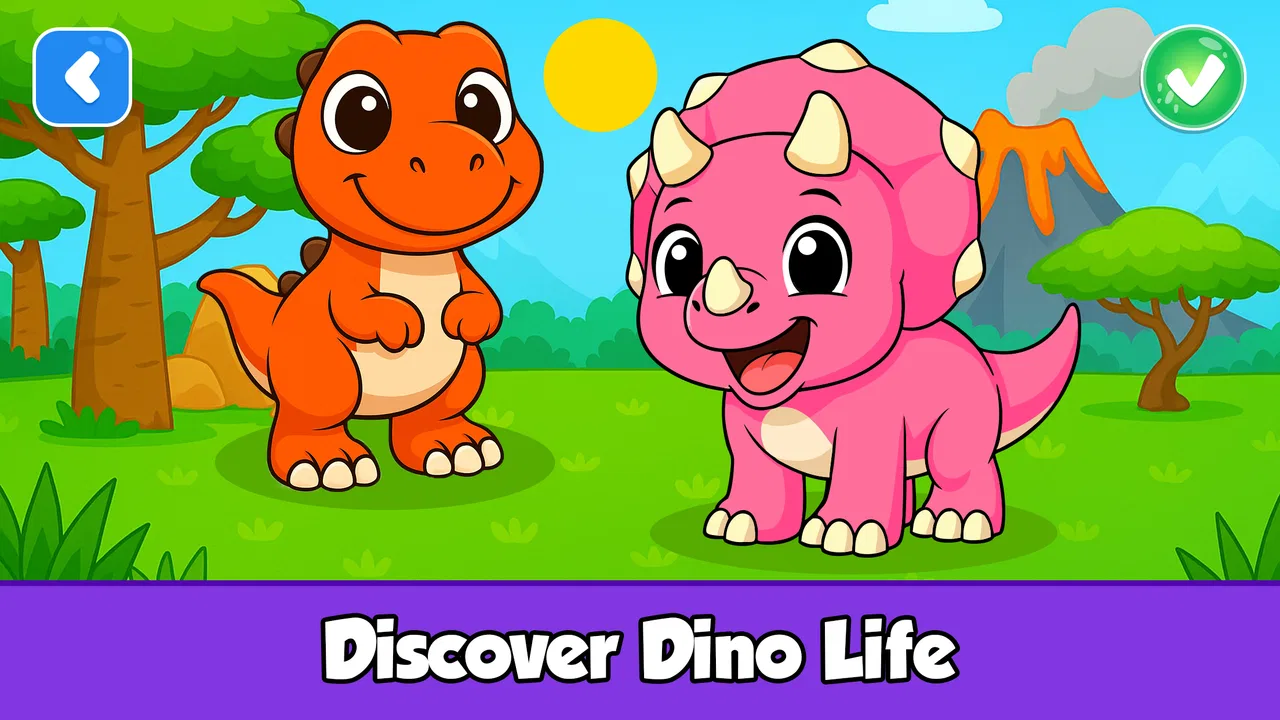
The current version is 1.01.11, and the overall experience feels focused rather than overloaded. The central idea is easy to understand: children interact with dinosaurs while working through activities such as puzzles and matching. That narrow focus is useful for small children because they do not have to learn a complicated game system before they can begin learning through play.
You May Also Like

 Blood Strike: 2.5 Anniversary
Blood Strike’s Loadouts Turn Every Drop Into a Tactical Gamble
A close look at Blood Strike’s custom loadouts: how fast access to signature weapons reshapes its battle royale rhythm, rewards preparation, and narrows the gap between fights.

 Pandora - Music & Podcasts
Pandora’s Music Is Easy to Start, but Harder to Recover
Pandora’s strength is its low-effort path from a seed to a station. Its weak spot is how much confidence it asks you to place in connection, setup, and quiet recovery.

 8 Ball Pool
 Is Built on Rivalries, Rematches, and Routine
A close look at the rivalries, rematches, shared routines, and unanswered safety questions that turn a quick pool match into a persistent mobile community.

 Samsung Music
’s Quiet Strength Is Playing What You Already Own
Its reach comes less from spectacle than from dependable access to a personal library. That simplicity is both the app’s strongest retention engine and its ceiling.

 AccuWeather: Weather Radar
AccuWeather Review: A Quick, Clear Forecast for Everyday Decisions
For everyday plans, the best forecast is the one you can understand quickly. AccuWeather makes rain timing, radar, and local conditions easy to act on, with a few trade-offs.

 Hill Climb Racing
Why Hill Climb Racing Still Turns Crashes Into One More Run
A tiny car, a bumpy hill and one more upgrade: Hill Climb Racing keeps resurfacing because its simple chaos makes every near-miss feel personal.
More From Our News Desk
View All News


In my experience, this kind of app works best when an adult introduces it briefly and then lets the child take over. A parent can explain that the goal is not to rush, but to look carefully at the shapes, pictures, or pairs on screen. Once the child understands that rhythm, the dinosaur theme does much of the motivational work. The child is not being pushed through a worksheet; they are being invited to complete a small challenge.
The game is also well suited to short sessions. I would use it while waiting for an appointment, during a quiet break before dinner, or as a change of pace after reading a picture book. It is not the sort of activity I would leave running for a long unsupervised stretch. Young children benefit more when an adult notices what they are practising and connects it to the real world.
For example, after a matching activity, I might ask the child to find two objects at home that have the same colour or shape. After a dinosaur puzzle, I might encourage them to describe which piece helped them finish the picture. That follow-up turns a few minutes of screen time into conversation, observation, and language practice. The game provides the prompt; the adult supplies the wider learning value.
Why the dinosaur setting matters
The prehistoric theme is more than decoration. Dinosaurs give the activities a clear emotional hook, which can be valuable for children who lose interest quickly in neutral educational exercises. A child who would ignore a plain matching task may pay closer attention when the images involve a favourite dinosaur. I found that this theme makes repetition feel less like drilling, especially when the child is still developing patience.
There is also a useful balance between imagination and structure. Dinosaur games can easily become noisy or action-focused, but this one is positioned around learning activities rather than fast competition. That makes it a calmer choice for parents who want dinosaur content without turning every session into a race or a battle.
Still, the theme will not appeal equally to every child. A preschooler who prefers animals, vehicles, drawing, or music may not find the same motivation here. The educational value is tied closely to the dinosaur presentation, so I would not choose it simply because it is labelled educational. I would choose it because the child is genuinely interested in dinosaurs or responds well to picture-based play.
What children are actually practising
The clearest learning value comes from the way the activities ask children to notice relationships. Matching encourages visual comparison, while puzzles support attention to shape, position, and the connection between a part and a whole. These are modest skills, but they matter at preschool age. A child is practising how to pause, inspect an option, make a choice, and adjust after an unsuccessful attempt.
That process is more important than whether the child can finish quickly. I would avoid giving the answer immediately when a piece does not fit. Instead, I would ask whether the edge or picture looks similar to another piece. This turns the game into guided problem-solving rather than a simple tapping exercise.
One useful routine is to let the child try independently first, then offer one small clue instead of taking over. This works particularly well with puzzles because the child can learn to use visual evidence. The game becomes a practice space for persistence, not just a way to keep a child occupied.
Parents should also remember that screen-based matching is not the same as handling physical objects. If the child enjoys the digital puzzles, I would follow them with blocks, shape sorters, or a paper puzzle. The app is strongest as a convenient starting point, not as a replacement for hands-on play.
What has changed and what that means for families
The game was released on October 17, 2025, and its current version gives the impression of a relatively early product in its life. That matters when setting expectations. I would approach it as a focused dinosaur learning game that can become more refined over time, rather than assuming it already offers the depth of a long-established preschool platform.
The visible version information is useful for families who already have the game installed. If a child is comfortable with the current experience, updating is generally sensible because newer builds can improve stability or polish. At the same time, I would check the app after an update before handing over the device, especially if the child has a favourite routine. Young users can be sensitive to even small changes in layout or interaction.
There are over 50 thousand installs, along with a 4.8 average from around 2.1 thousand ratings. Those figures suggest that the game has found a receptive audience, but they should not be treated as proof that it will suit every preschooler. A high average can tell me that many families enjoy the general experience; it cannot predict whether a particular child will prefer dinosaurs, puzzles, or a more open-ended creative app.
The developer, Bebi Family: preschool learning games for kids, has a clear connection to the target age group. That is reassuring from a positioning standpoint because the game is not trying to serve older children and toddlers at the same time. Its identity is straightforward: early learning through friendly dinosaur activities.
Free access and the practical cost question
The game is free, with in-app purchases priced at $2.99 per item. For a parent, the important point is not simply that the initial download costs nothing. It is worth checking the purchase controls on the device before giving the game to a child, particularly if the child tends to tap quickly or explore every visible button.
I also recommend treating the free portion as a trial of the interaction style. Watch whether the child enjoys matching and puzzles before considering any optional purchase. If the child only likes the dinosaur pictures but becomes frustrated by the tasks, paying for more content would not solve the underlying mismatch. If the child repeatedly returns to the activities and benefits from them, an optional purchase may make more sense, provided it fits the family’s rules.
This pricing model is different from a fully paid educational app because it lowers the barrier to trying the game. It is also less predictable than a single-purchase experience because families may need to manage what is available beyond the starting content. Compared with a free video, however, the game at least asks the child to make choices and solve problems rather than passively watch.
How it compares with familiar alternatives
Compared with physical dinosaur puzzles, the app is more portable and easier to use in a waiting room. Physical puzzles provide better tactile feedback and can support shared play between a child and an adult, but they are less convenient to carry and can lose pieces. I see the digital game as a useful companion, not a substitute.
Compared with general preschool learning suites, this game is narrower. A broad learning app may cover early numbers, letters, colours, music, stories, and drawing in one place. That variety can be better for a child who needs frequent changes of activity. Fun Dinosaur Games for Kids is a stronger choice when the dinosaur theme is the main reason a child will engage, and when the parent wants a simpler experience with less wandering between unrelated subjects.
Compared with dinosaur videos, the game has a more active learning rhythm. A video may be calmer when a child needs to settle, while this app is better when the child has enough attention to look, compare, and respond. Neither option is automatically better; the right choice depends on whether the goal is quiet viewing or active participation.
Compared with open-ended drawing apps, it offers more structure but less freedom. Children who enjoy making their own scenes may outgrow the guided activities quickly. Children who need clear goals and immediate visual context may find the structure comforting.
Where the experience still has limits
The biggest limitation is that simple activities can become repetitive for children who progress quickly. Matching and puzzles are valuable, but they do not cover every area of preschool development. I would not rely on this game alone for early learning, language growth, counting practice, fine-motor development, or social play. Its best role is one small part of a broader routine.
Another limitation is the need for adult judgement about difficulty. A child may breeze through a task and need a more challenging activity, while another may need encouragement and extra time. The app can provide the activity, but it cannot replace a parent or teacher who notices frustration, boredom, or genuine progress.
There is also a trade-off between convenience and real-world interaction. A phone or tablet makes the game available almost anywhere, but the child is still looking at a screen and tapping glass. I would avoid presenting it as a reward for every quiet moment. Used occasionally and followed by conversation or physical play, it feels more balanced.
Families seeking a completely offline, one-time-purchase experience may prefer a physical puzzle set or a paid app with a clearly defined content package. Families wanting detailed progress reports, classroom-style lessons, or a broad academic sequence should look for a more comprehensive educational platform. This game is not the right tool for those needs, and choosing it with that expectation could lead to disappointment.
Small details that improve the experience
One practical tip is to play the first session together without trying to teach every skill at once. Let the child explore the dinosaur images, then focus on one behaviour such as comparing two pieces carefully. This keeps the introduction relaxed and helps reveal whether the child understands the interaction or is simply tapping randomly.
A second tip is to use verbal prompts that describe what the child can see. Saying “look at the matching picture” or “which piece has the same edge?” encourages observation without turning the session into a test. This is more useful than praising speed, because it reinforces the thinking process the puzzles are meant to support.
A third useful approach is to stop before the child becomes tired. Ending after a successful puzzle can leave the child with a positive sense of completion. Continuing until every activity feels boring may make the game seem less enjoyable the next time. Short, well-timed sessions are likely to work better than trying to extract a long lesson from a small game.
I would also rotate it with non-screen activities that use the same ideas. Pair the digital matching with sorting socks, matching lids to containers, or finding identical pictures in a book. Pair the puzzle activity with assembling a simple physical puzzle. These connections help the child understand that the skills are useful beyond the dinosaur world.
Who should try it now
I think this game is a good fit for families with a toddler or preschooler who already enjoys dinosaurs and responds to visual challenges. It is particularly handy for short periods when you want something more interactive than a video but less demanding to organise than a physical activity. The everyone content rating also makes it approachable for a family audience, while parents should still choose activities according to the child’s individual age, patience, and abilities.
I would skip it if the child has little interest in dinosaurs, needs advanced educational content, or becomes frustrated by guided puzzles. I would also look elsewhere if your priority is a full learning programme with a carefully sequenced range of subjects. In those situations, a broader preschool app, a teacher-led activity, or traditional toys may offer more value.
For existing users, the current version is worth keeping available if the child returns to it willingly and the activities fit into a healthy routine. I would watch future updates for signs of deeper variety, smoother progression, and better support for different ability levels. Those improvements would matter more to me than simply adding more dinosaur artwork.
My final view is positive but measured. Fun Dinosaur Games for Kids works best as a focused, friendly learning break: it uses a strong theme to make matching and puzzle practice more inviting, stays approachable for young children, and is easy to test because it is free to start. Its limits are just as clear. It is not a complete preschool programme, not a replacement for hands-on play, and not automatically engaging for children who do not care about dinosaurs.
If your child lights up at the sight of a dinosaur and enjoys finding pairs or fitting pieces together, I would give it a try. Start with a shared session, keep the time short, secure the purchase settings, and use the activities as a bridge to real-world play. That is where I think this game offers its greatest value: not as the whole lesson, but as a small prompt that can turn a child’s favourite prehistoric creatures into a reason to look closely, persist, and talk about what they have discovered.
FAQs for Fun Dinosaur Games for Kids
01What is Fun Dinosaur Games for Kids, and what can children do in the app?
Fun Dinosaur Games for Kids is an educational entertainment app designed around prehistoric animals. Children can explore colorful dinosaur-themed activities, solve simple puzzles, match shapes, complete memory challenges, and enjoy interactive scenes. The games are generally easy to understand and focus on recognition, coordination, and problem-solving while keeping the experience playful and suitable for younger users.
02Is Fun Dinosaur Games for Kids suitable for my child’s age?
The app is mainly intended for preschool and early elementary-age children, although the ideal age can vary depending on the child’s reading ability and experience with mobile games. Most activities use visual instructions and straightforward controls, making them accessible to beginners. Parents should review the store listing and available settings to confirm the recommended age range before downloading.
03Does the app require an internet connection to play?
Many dinosaur games for children can be played offline after installation, which is useful for travel or situations without Wi-Fi. However, certain features may depend on an internet connection, including advertisements, purchases, updates, or links to other content. It is best to open the app once while connected, check which activities work offline, and supervise access to any online features.
04Does Fun Dinosaur Games for Kids contain advertisements or in-app purchases?
The availability of advertisements and in-app purchases depends on the specific version of the application and the platform where it is downloaded. Some free children’s games display ads or offer additional levels, characters, or features for payment. Parents should check the app’s store description, configure parental controls, and avoid saving payment details on a child’s device without supervision.
05Is Fun Dinosaur Games for Kids safe for children to use?
The app is designed as child-friendly entertainment, but parents should still supervise the first sessions and review its permissions, advertising behavior, and external links. Check whether the game collects personal information, offers social features, or redirects users to other websites. Using device-level parental controls and downloading only from the official Google Play Store or Apple App Store can provide additional protection.
Pros
- Simple controls make it easy for young children to play independently.
- Bright dinosaur designs and animations keep gameplay visually engaging.
- Short activities suit children with limited attention spans.
- Offline play is useful for travel or areas without internet access.
- Educational mini-games can support basic memory and coordination skills.
Cons
- Some activities may feel repetitive after extended play sessions.
- The app may be too easy for older children.
- Advertisements or locked content may interrupt the experience.
- Sound effects can become distracting without parental volume controls.
- Limited customization may reduce replay value for some children.

Fun Dinosaur Games for Kids
Gallery